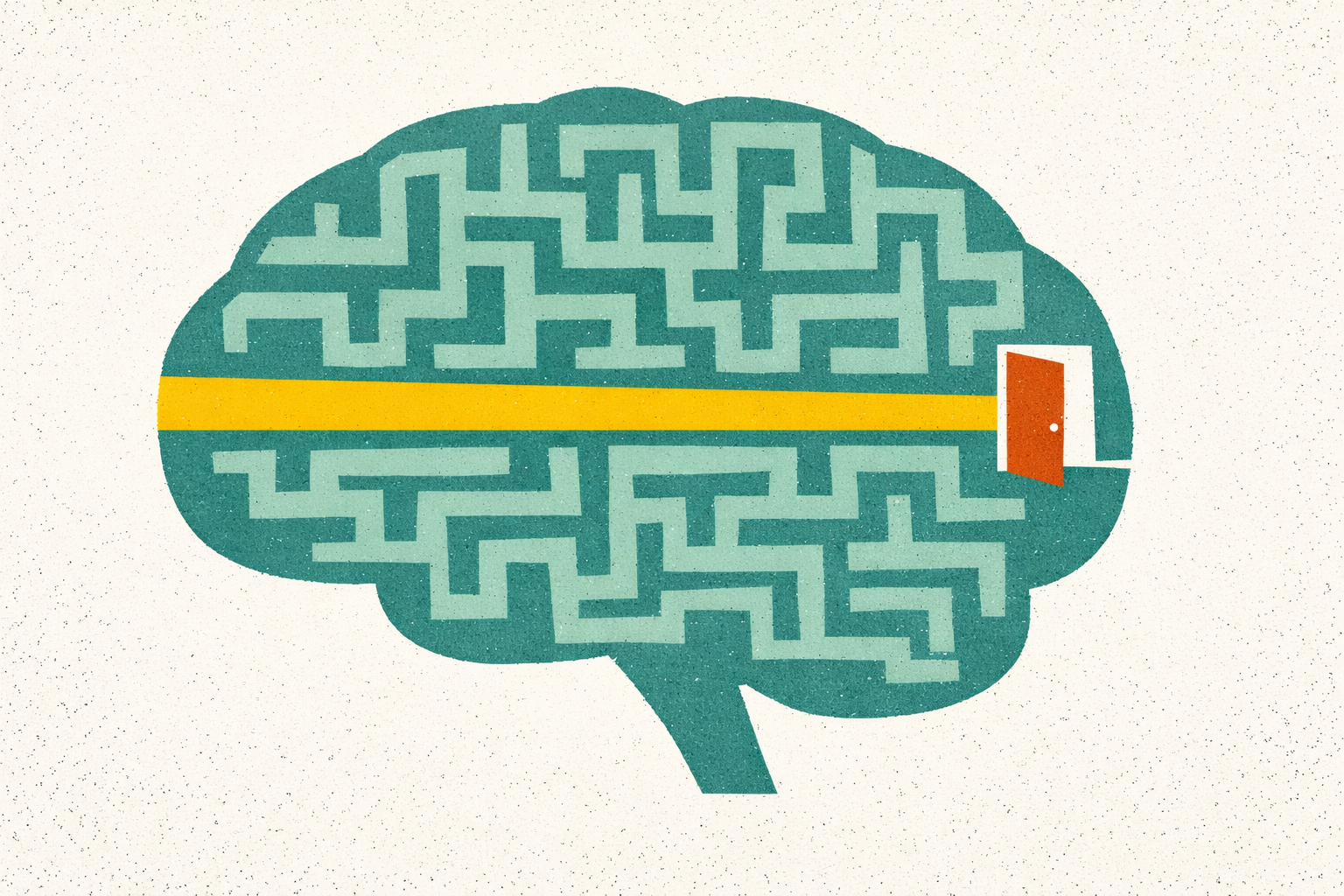
You are midway through an interview, and the conversation shifts from your background to a scenario: a failing project, a trade-off between speed and risk, or a conflict between two senior stakeholders. The interviewer is quiet, taking notes, and the question is broad enough that several “right” answers seem possible. Many experienced candidates respond by trying to cover every angle. They talk longer, add caveats, and lose their thread. In practice, complex interview questions rarely require a perfect solution. They require a disciplined way of thinking that a recruiter can trust.
Why this interview situation is more complex than it appears
Complexity in interviews is often structural, not technical. The question may combine incomplete information, competing constraints, and a need to make assumptions in real time. It is less “What do you know?” and more “How do you decide when you do not know everything?”
Another hidden difficulty is that the interviewer is evaluating your process while you are still forming it. In day-to-day work, you would ask follow-up questions, consult data, and test options with colleagues. In an interview, you must compress that process into a few minutes without sounding speculative or defensive.
Common preparation fails here because it tends to be content-driven: memorized stories, frameworks recited from memory, and rehearsed “best practices.” Those tools can help, but they break down when the question does not match the script. Candidates then default to overthinking, trying to anticipate every objection instead of choosing a clear path and explaining it.
Takeaway: Treat complex interview questions as decision problems under constraints, not as prompts for exhaustive knowledge.
What recruiters are actually evaluating
Recruiters and hiring managers are usually not grading your answer against a hidden rubric with one correct outcome. They are assessing whether your reasoning is trustworthy enough to put into a role where ambiguity is normal. Four signals tend to matter.
First, decision-making. When the problem is messy, do you move toward a decision, or do you stay in analysis mode? Strong candidates show that they can choose a direction, explain why, and acknowledge what they would validate next. Weak candidates keep adding branches until the answer collapses under its own weight.
Second, clarity. Clarity is not simplification; it is control. The interviewer listens for whether you can state the problem in your own words, name the key constraint, and keep your language stable. If your terms shift mid-answer, or your conclusion changes three times, it signals uncertainty even when your ideas are sound.
Third, judgment. Judgment shows up in what you prioritize and what you ignore. For example, in a customer escalation scenario, a candidate with judgment will differentiate between immediate containment and long-term prevention, and will not treat them as equal tasks in the same moment.
Finally, structure. Structure is how you make your thinking legible. This can be as simple as, “I’d start with context, then outline options, then choose based on risk and timeline.” Recruiters do not need a branded framework; they need to see that you can organize complexity into a sequence.
Takeaway: In difficult questions, recruiters are evaluating the reliability of your thinking, not the elegance of your final answer.
Common mistakes candidates make
The most common mistake is answering before aligning on the question. Candidates hear a scenario and rush to prove competence. They skip clarifying what “success” means, who the decision-maker is, or what constraints are fixed. The result is a detailed answer to a different problem than the interviewer intended.
A second mistake is mistaking breadth for rigor. In complex interview questions, some candidates list every possible factor: stakeholders, budget, compliance, morale, roadmap, technical debt. The list sounds comprehensive, but it does not show prioritization. A recruiter typically trusts the candidate who selects three drivers and explains why those three matter most.
Third, candidates often narrate their internal debate. You can hear them thinking out loud: “It depends… unless… but then again…” This is where overthinking becomes visible. The interviewer loses the through-line and cannot tell what you would actually do on Monday morning.
Another subtle mistake is using generic language when specificity is available. Saying “I would communicate proactively” is less credible than “I would set a 15-minute daily check-in with the engineering lead and send a written update to the customer success manager after each milestone.” Specificity signals that you have lived through similar trade-offs.
Finally, candidates sometimes become overly cautious to avoid being wrong. They hedge every statement, which reads as low conviction. Recruiters know you lack full context; they are watching whether you can make reasonable assumptions and move forward.
Takeaway: Avoid performing complexity. Show prioritization, make assumptions explicit, and keep your conclusion stable.
Why experience alone does not guarantee success
Senior candidates often assume that years in role will carry them through complex interview questions. Experience helps, but it can also create blind spots. One is pattern overreach: applying a familiar solution too quickly because it worked before, without checking whether the current scenario matches the underlying conditions.
Another is compressed communication. In real work, senior people rely on shared context and shorthand. In an interview, that shorthand can sound like skipping steps. The interviewer may not share your mental model, and when you jump to the conclusion you can appear vague, even if you are correct.
There is also the problem of identity risk. Experienced candidates can feel more at stake: they are expected to be decisive, and that expectation can amplify interview anxiety. The response is often to over-qualify the answer to protect credibility. Ironically, that protection strategy makes the answer harder to follow.
Finally, seniority can reduce practice frequency. People who have not interviewed in years may be excellent at leading teams but rusty at explaining their reasoning under time pressure. Interviews reward the ability to externalize thinking cleanly, not just to think well privately.
Takeaway: Experience improves your raw material, but interviews still require practiced communication and deliberate decision framing.
What effective preparation really involves
Effective preparation is less about collecting answers and more about building a repeatable response process. That process should work even when you do not get the question you hoped for. It starts with repetition: practicing many variations of scenario questions until the structure becomes automatic.
Repetition alone is not enough if the practice is too comfortable. Realism matters. Practice should include time pressure, interruptions, and follow-up questions that force you to defend assumptions. If you only rehearse uninterrupted monologues, you will be surprised by a recruiter who asks, “Why did you choose that?” halfway through.
Feedback is the accelerant. Not “You did great,” but specific notes on where your answer became unclear, where you hedged, and where you missed a key constraint. Many candidates think they are being structured when they are actually listing. An external listener can tell the difference quickly.
A practical method is to standardize a short sequence you can adapt. For example: restate the problem, ask one or two clarifying questions, name assumptions, outline two options, choose one, then explain risks and next steps. The goal is not rigidity; it is a default path that prevents spiraling when the question is ambiguous.
It also helps to practice “closing” an answer. Complex interview questions tempt candidates to keep talking until they run out of ideas. Instead, aim to land the plane: summarize your decision in one sentence, then invite the follow-up. This shows control and makes it easier for the interviewer to evaluate you.
Takeaway: Prepare a repeatable decision-and-communication sequence, then stress-test it with realistic pressure and targeted feedback.
How simulation fits into this preparation logic
Simulation can make practice more realistic by recreating the pacing and follow-ups that trigger overthinking in live interviews. Platforms such as Nova RH can be useful when they help you rehearse complex interview questions under constraints, review where your structure breaks, and iterate with feedback rather than relying on one-off mock sessions.
Takeaway: Use simulation to practice the conditions that cause you to lose clarity, not just the content of your answers.
Conclusion
Complex interviews are not primarily tests of knowledge; they are tests of how you reason in public. When candidates struggle, it is often because they try to solve the entire problem instead of making a defensible decision with clear assumptions and a coherent structure. The remedy is not more cleverness. It is disciplined practice: repeated exposure to difficult questions, realistic pressure, and feedback that sharpens clarity. If you want a structured way to rehearse, a neutral option is to incorporate interview simulation into your preparation.